

Axon by Applovin Best Practices: Smarter Campaigns, Better ROAS
Best Practices for Running Campaigns on AppLovin’s Axon AI Platform
Running campaigns on Axon requires more than launching ads — it requires a clear setup, aligned goals, and consistent creative and bidding strategies. This guide outlines practical best practices for advertisers using Axon, especially those focused on web campaigns optimized for ROAS (Return on Ad Spend) and CPP (Cost Per Purchase). Each section is designed to help advertisers make informed decisions that support performance and scale.
1. Understand What Axon Optimizes
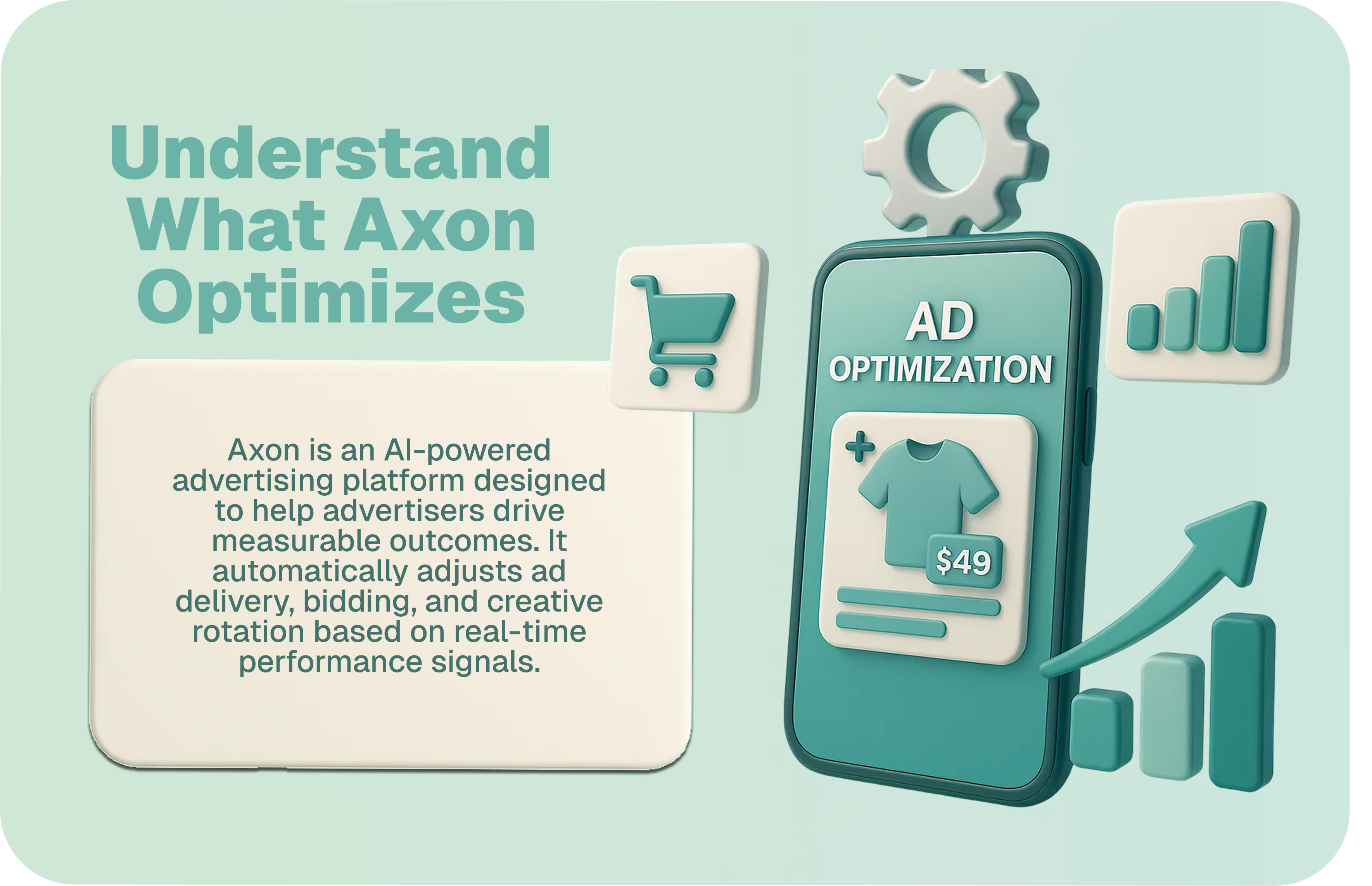
Axon by AppLovin is an AI-powered advertising platform designed to help advertisers drive measurable outcomes. It automatically adjusts ad delivery, bidding, and creative rotation based on real-time performance signals. Axon campaigns run across mobile gaming inventory and supports both app and web campaigns.
For web advertisers, Axon uses pixel-based signals to model conversion likelihood and optimize delivery. For app campaigns, it uses SDK data and SKAN postbacks to adapt to privacy constraints. In both cases, Axon’s goal is to improve efficiency and maximize ROAS without requiring manual audience segmentation or bid adjustments.
2. Set Up Campaigns with Clear Objectives
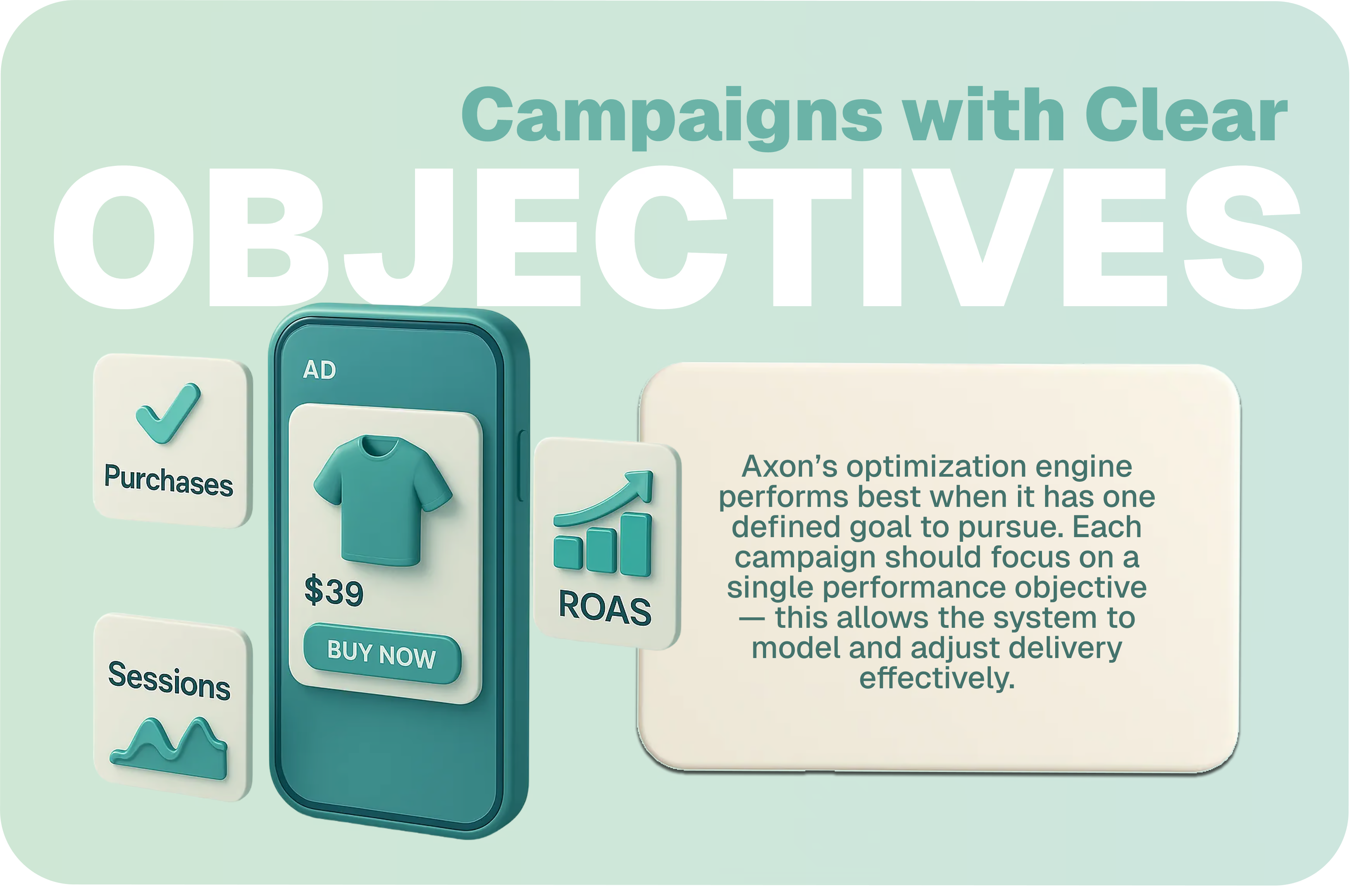
Axon’s optimization engine performs best when it has one defined goal to pursue. Each campaign focuses on a single performance objective — this allows the system to model and adjust delivery effectively.
For web advertisers, the two recommended optimization goals are ROAS and CPP.
ROAS (Return on Ad Spend) focuses on maximizing the revenue generated for each dollar spent. Axon’s model evaluates predicted conversion value and prioritizes impressions likely to result in higher-value purchases — ideal for advertisers aiming for efficiency and scale.
CPP (Cost Per Purchase) focuses on acquisition efficiency. The system minimizes the cost of each conversion while maintaining quality standards. These campaigns are ideal for customers looking to maximize conversions, not value upon purchase. A good example would be subscription advertisers.
3. Install the Axon Pixel and Configure the Conversions API
Axon’s performance depends heavily on clean, consistent signal input. For web campaigns, this means installing the Axon pixel and setting up the Conversions API to pass accurate conversion data.
The Axon pixel should be placed on all key pages in your purchase funnel — such as product pages, checkout pages, and purchase confirmations. This helps Axon map user journey patterns and identify where conversions are most likely to occur.
The Conversions API (today mostly supported by Axon partners) complements the pixel by sending server-side events like purchases (including revenue), add-to-cart actions, and page views. These events are aggregated and anonymized before being used to train Axon’s models. Axon never relies on personal identifiers or user-level tracking. Instead, it uses behavioral and contextual data to predict which impressions are most likely to convert.
Before launching campaigns, advertisers should always confirm that all key conversion events are firing properly and that revenue attribution is accurate. Incomplete or inconsistent data can significantly limit optimization performance — for instance, if purchase events or revenue values are missing, Axon can’t accurately model conversion value.
4. Manage Creative Assets Strategically
Axon’s creative optimization system continuously evaluates ad performance, prioritizing top-performing assets in real time. The best results come from variety — both in format and messaging. Advertisers should upload multiple creative variants per campaign to give the system enough data to identify trends and suppress low performers.
Effective Axon creatives are designed for mobile-first environments, as most impressions are served across mobile devices. Use clear, product-focused visuals with minimal text, and ensure the value proposition is immediately visible without relying on audio. Each ad should communicate one focused message and one clear call to action (CTA).
When writing CTAs, avoid generic phrasing like “Learn More.” Instead, use context-driven, offer-oriented language that connects directly to the user’s motivation — for example, “Get 20% Off,” “Shop the Collection,” or “Start Your Free Trial.” Keep messaging aligned between your ad and landing page for consistency and conversion efficiency.
Refresh creatives regularly — ideally every one to two weeks — to prevent fatigue. Even though Axon automatically adjusts creative weighting, consistently updating assets helps sustain engagement and signal quality over time.
5. Align Bidding Strategy with Your Campaign Goal
Axon uses predictive bidding, which means it automatically bids higher or lower based on the probability that a given impression will lead to a valuable action. There’s no need for manual bid adjustments — instead, focus on setting the right campaign objective.
For ROAS campaigns, Axon increases bids on impressions predicted to drive higher purchase values.
For CPP campaigns, Axon focuses on minimizing cost per purchase while maintaining conversion quality.
Campaigns typically undergo a short learning phase (three to five days) while Axon collects performance data. During this period:
- Start with a modest daily budget.
- Allow the system to stabilize before scaling spend.
- Increase budgets gradually after consistent performance is achieved.
Avoid rapid budget changes or multiple simultaneous adjustments. Stability during learning is key to strong performance once Axon’s predictive models fully calibrate.
6. Monitor ROAS and Supporting Metrics
While ROAS is the central performance metric for ecommerce advertisers, monitoring supporting KPIs helps identify where optimizations may be needed. Key metrics include:
- Conversion rate (CVR): Measures how effectively clicks convert into purchases.
- Click-through rate (CTR): Indicates how well creatives engage the audience.
- Page view depth: Reflects user engagement and funnel progression.
If ROAS is underperforming, these secondary metrics can help diagnose whether the issue lies with creative engagement, signal quality, or landing page friction. Clean data, aligned goals, and fresh creatives together form the foundation of strong ROAS performance.
7. Avoid Common Pitfalls That Limit Performance
Even automated systems require correct setup to deliver optimal results. Advertisers should be mindful of the following issues:
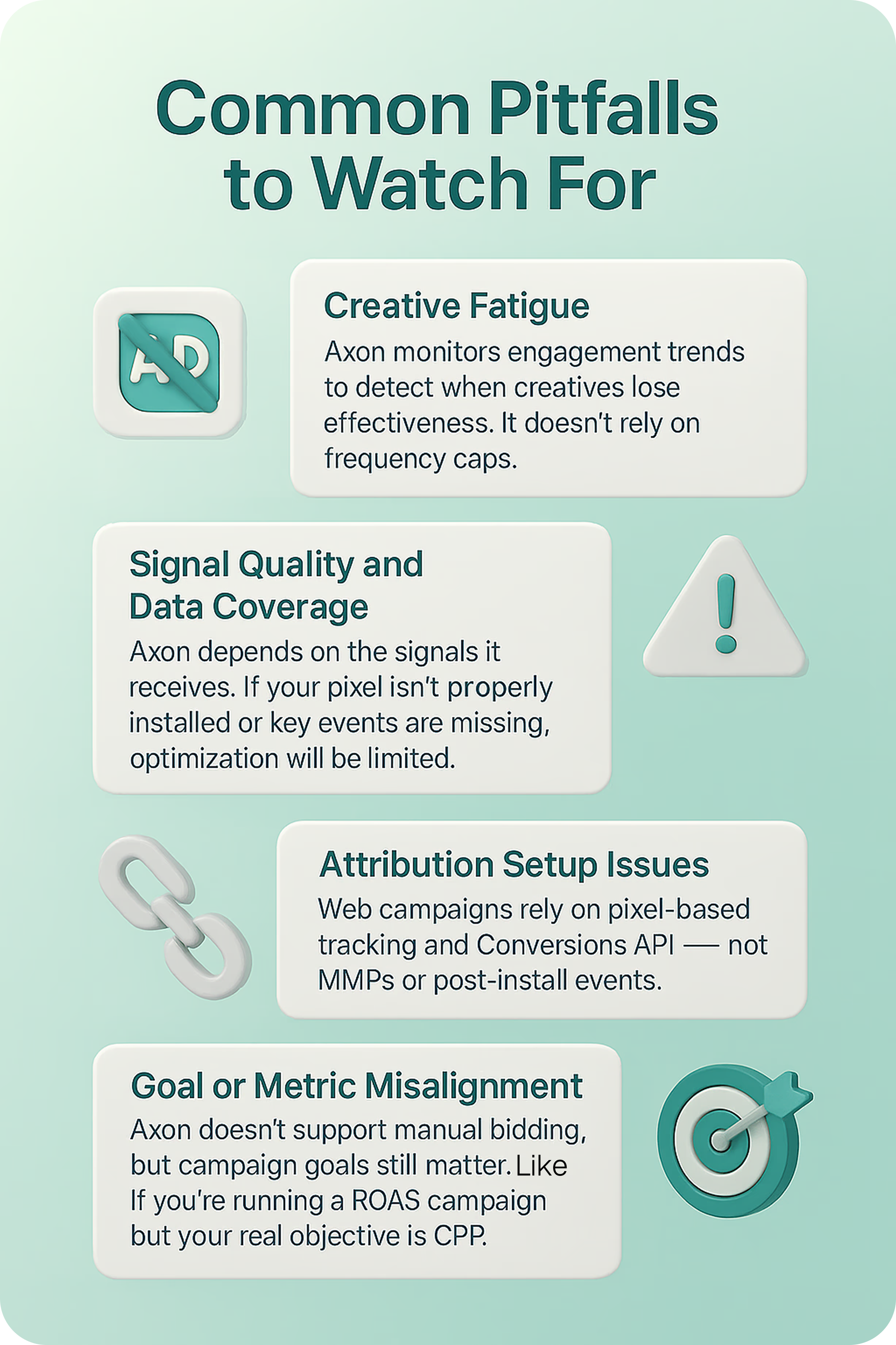
Creative Fatigue
This one of the most common causes of declining performance. Be proactive, do not wait for engagement or conversions to drop, refresh creative assets weekly. Axon does not track frequency caps manually, but it will react to drops in engagement, which can slow optimization if signals weaken.
Signal Quality and Data Coverage
Both those points directly affect Axon’s ability to model conversion likelihood. Always verify that your pixel and Conversions API are firing correctly, that purchase events include revenue values, and that all key actions (like add-to-cart) are tracked consistently.
Attribution Setup
Attribution is another critical area. For web campaigns, attribution is entirely pixel-based. Ensure your pixel implementation is complete and that events and revenue mapping are correct. Attribution errors can distort reported performance and lead to inefficient bidding.
Goal Misalignment
Finally, goal misalignment can compromise optimization. Each campaign should be created with the correct objective (ROAS or CPP) that truly reflects your business goal. Misalignment between declared and actual goals can confuse Axon’s learning process and lead to inconsistent results.
How to Run Smarter Campaigns with Axon
To get the most out of Axon, advertisers should focus on clean setup, aligned goals, and consistent creative rotation. The platform is designed to automate delivery and bidding, but its performance depends on the quality of the signals it receives and the clarity of the campaign objective.
Key takeaways:
- Choose a campaign objective that aligns with your business goals
- Install the pixel and configure the Conversions API correctly
- Upload diverse, mobile-first creatives and refresh them regularly
- Align bidding strategy with your business objective
- Monitor supporting metrics to diagnose performance
- Avoid common pitfalls like creative fatigue, signal gaps, and goal misalignment
Axon is built to simplify complex optimization tasks. By following these best practices, advertisers can improve ROAS, reduce acquisition costs, and scale campaigns efficiently — without needing to manage every detail manually.
FAQs
Is Axon only for mobile apps? No. Axon supports both app and web campaigns. Ecommerce brands can run high-performing campaigns using the Axon pixel — no app required.
Can I segment audiences in Axon? No. Axon’s targeting is fully automated. It uses contextual and behavioral signals to deliver ads to high-intent users.
What’s the difference between CPI and CPP? CPI applies to app installs. CPP applies to purchases on websites. Axon supports both, but CPP and ROAS are the core metrics for web advertisers.
Does Axon use first-party data for targeting? No. Axon does not match or target users based on uploaded first-party data. It uses aggregated, privacy-safe signals to optimize delivery.
How does Axon handle creative testing? Axon rotates creatives automatically based on performance. You don’t need to manually A/B test — the system adapts in real time.
Is Axon compliant with privacy regulations? Yes. Axon uses aggregated, anonymized signals and complies with GDPR, CCPA, and ATT.
.png)
Learn the major differences between Discovery Campaigns and Prospecting Campaigns on Axon by AppLovin.
.png)
Learn how IDFA works in 2026, when it applies, why user consent matters, and how it fits into modern iOS advertising with SKAN, modeling, and Axon.
.png)